


Cattle yard panels are the modular steel building blocks behind almost every working yard in Australia and New Zealand — from permanent sets of yards on a cattle property to a portable run that gets shifted between paddocks. The size that dominates both markets is the 2.1 m panel, most often supplied in 1.2 m, 1.3 m and 1.8 m heights, hot-dip galvanised, and delivered with the pins, lugs and chain eyes needed to lock panel to panel. This guide covers the specification details that actually decide whether a set of cattle yard panels performs for fifteen years or starts failing in the first coastal winter, plus the yard-planning maths most buyers get wrong.
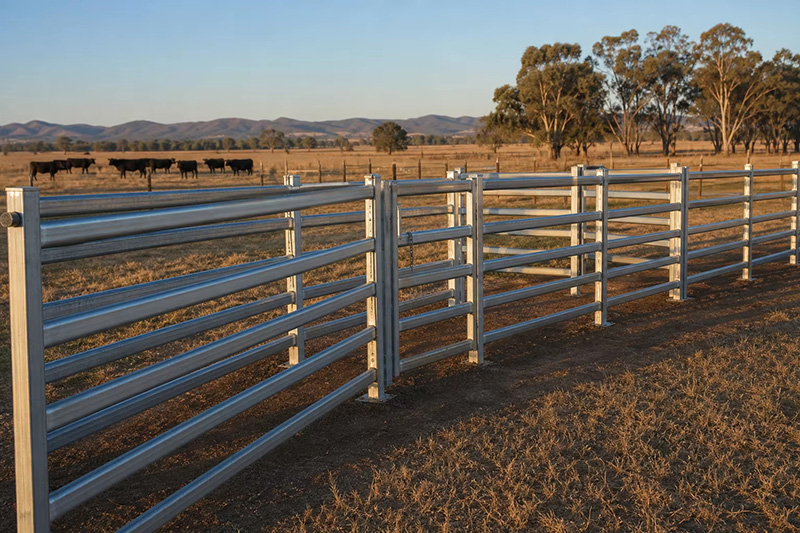
What Are Cattle Yard Panels and Why 2.1 m Became the Standard
A cattle yard panel is a welded steel frame: a run of horizontal rails — commonly six — welded to vertical uprights, with a chain eye welded to the frame at one end and lugs or pins at the other so consecutive panels hinge together. Because every panel is identical, the same unit works as a permanent yard wall, a portable stockyard that gets dismantled and moved, a forcing pen, a race, or a round yard for horses.
The 2.1 m length is not arbitrary. It is short enough that two people can walk a panel into position on uneven ground, long enough that a 20 m pen closes in a reasonable number of units, and it matches the gate widths and race dimensions already used across Australian and New Zealand yards. Buyers who import a different length to save on freight usually find they have to re-cut gates or accept awkward gaps, which costs more than the freight saved.
Heights tell you what the panel is for. A 1.2 m panel suits sheep, calves and lambs; 1.3 m is a common compromise for mixed sheep-and-cattle work; 1.8 m is the cattle and horse height and the one most buyers picture when they say “cattle yard panels.”
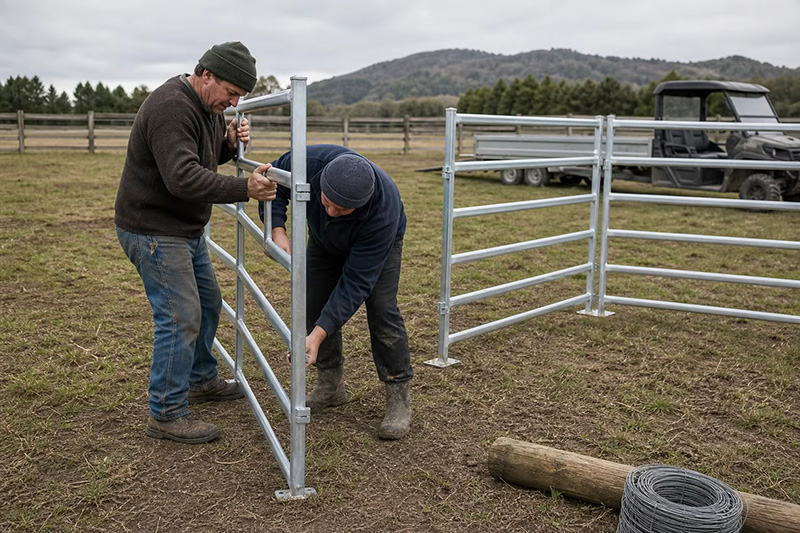
Cattle Yard Panel Specifications at a Glance
The specification below is the configuration most commonly requested for Australian and New Zealand yards. Ask any supplier for these figures in writing before you compare prices, because two panels at the same price can differ substantially in steel.
| Specification | Typical configuration |
|---|---|
| Panel length | 2.1 m (8–14 ft options available on request) |
| Panel height | 1.2 m, 1.3 m, 1.8 m |
| Horizontal rails | 6 rails |
| Horizontal rail profile | Oval pipe, 30 × 60 × 1.6 mm |
| Vertical uprights | 40 × 40 × 1.6 mm or 50 × 50 × 2.0 mm |
| Finish | Hot-dip galvanised, or powder coated |
| Connections | Chain eye welded to frame; pins, lugs and footplates |
| Hardware | Full gate hardware set available |
| Packing | Bulk or palletised |
Reading a Spec Sheet Without Getting Misled
Three numbers decide how a panel behaves in service. The first is rail profile: an oval rail 30 × 60 mm resists bending better in the direction stock lean on it than a round pipe of similar weight, which is why oval is the default for yard work. The second is upright thickness — 40 × 40 × 1.6 mm is a sound general-purpose upright, while 50 × 50 × 2.0 mm is the heavy-duty option for bulls, working horses and long-term permanent installations. The third is coating mass; a genuine hot-dip galvanised finish measured in grams per square metre is a very different product from a thin electroplated or painted surface, even though both may be described as “galvanised.”
Heights Explained: 1.2 m, 1.3 m and 1.8 m Panels
Choose height from the animal, not the budget. At 1.2 m, a panel is a sheep and calf divider — light enough to move by hand, ideal for temporary lambing paddocks and shearing-shed runs. At 1.3 m it handles store cattle that are not yet pushing hard, and doubles as a sheep panel with real presence. At 1.8 m you are buying a cattle and horse panel: tall enough that a beast in a forcing pen cannot climb out and that a horse being worked in a round yard respects the boundary. Running 1.2 m panels where 1.8 m is needed is the single most common yard-building mistake, and it usually shows up the first time cattle are drafted.
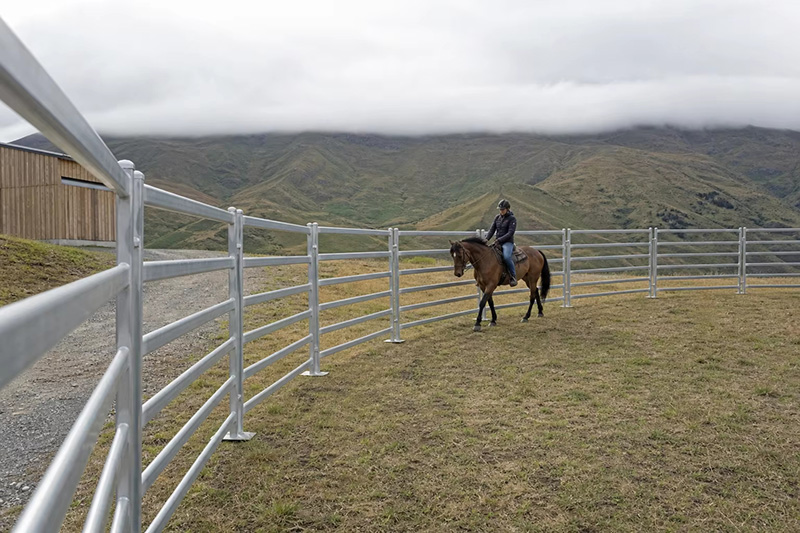
Galvanised vs Powder-Coated Cattle Panels
Hot-dip galvanising works by immersing the finished, welded frame in molten zinc, so the coating forms an alloy layer bonded to the steel and covers the inside of every tube, the weld collars and the cut ends. That last point matters most in Australia and New Zealand. Yards near the coast, in the tropics and in high-rainfall districts fail at weld joints and cut ends long before the flat surfaces rust, and only a full immersion coating protects those points.
Powder coating sits on the surface of the steel. It gives a clean, colour-matched finish that suits saleyards, showgrounds and stud operations where presentation counts, and it is a reasonable choice for inland, low-humidity sites. It is not a substitute for galvanising in a coastal or tropical yard, because any chip or weld-joint breakdown exposes bare steel that then corrodes from a small start.
A common and effective specification combines both: hot-dip galvanise the whole frame first, then apply an epoxy repair coat to the weld joints. If you farm on the coast or in the tropics, ask whether weld joints are treated separately — it is the cheapest durability upgrade you can buy.
Cattle Yard Gates, Pins, Lugs and Footplates
Panels are only half a yard. The working parts are the connections, and they are where budget yards reveal themselves.
- Chain eyes. A chain eye welded to the frame lets adjacent panels hinge and follow ground contours. A chain eye that is welded rather than bolted will not work loose under livestock pressure.
- Pins and lugs. Drop-in pins secure panel to panel and panel to gate. Buy enough pins for every joint, and keep a handful spare — lost pins, not broken panels, are what stalls a mob move.
- Footplates. A flat foot welded to the base of each upright stops the panel sinking into soft ground and spreads load on hard ground. On sandy or wet country, footplates are the difference between a yard that stays square and one that walks out of alignment.
- Cattle yard gates. Match gate height to panel height and confirm it arrives with hinges, lugs and a catch. A 2.1 m gate opening is the standard companion to 2.1 m panels.
How Many Panels Do You Need? Planning a Portable Cattle Yard
Work from perimeter, not area. Each 2.1 m panel covers 2.1 m of wall, so divide the perimeter of the pen you want by 2.1 and round up, then add gates and a small allowance for corners that need a shortened panel.
For a circular round yard, perimeter equals π × diameter. A 15 m diameter round yard has a perimeter of about 47 m, which is roughly 23 panels, plus one gate panel. A 20 m × 20 m square holding pen has an 80 m perimeter — about 38 panels before you deduct the gate opening. A 10 m × 10 m forcing pen needs about 19 panels, again less the gate.
Sizing a Round Yard for Horses and Cattle
Round yards are usually built to a diameter that lets an animal move forward without being trapped. For horses, 15–18 m is the working range; for cattle handling, 12–15 m keeps the mob moving. Because a circle closes with any number of panels, round yard panels are the most forgiving part of a yard to plan — but never build a circle with too few panels to reach the target diameter, because a tight, small round yard defeats the purpose. Check the diameter before you order, not after.
Temporary Yards, Saleyards and Shearing Set-Ups
Where the yard has to move, panel weight and connection speed set the limit. Lighter 1.6 mm upright builds are the ones two people can shift by hand; heavier 2.0 mm builds want a tractor or a two-person lift every time. Ask for the per-panel weight before you order if labour is short, and specify footplates if the yard will sit on soft ground for weeks at a time.
Sheep Yard Panels and Horse Round Yard Panels: One System, Three Jobs
The same panel system covers three distinct jobs, which is why buyers standardise on one length and one finish.
For sheep, a 1.2 m panel is the right height and the light build is a genuine advantage — sheep yard panels get moved constantly, and every kilogram matters. For horses, a 1.8 m panel in a round or square format becomes a horse round yard panel; horse work stresses panels laterally rather than vertically, so upright thickness and weld quality matter more than height alone. For cattle, 1.8 m panels in the 50 × 50 × 2.0 mm upright build form the drafting race, forcing pen and yard walls.
Buying all three from the same specification range keeps panels interchangeable. Mixing suppliers usually means mixing pin diameters, and mismatched pins turn a five-minute yard rebuild into a permanent frustration. It also means one spare panel fits every job on the property, which is worth more than a marginal saving on a second order at a different specification.
Installation and Maintenance Checklist
A galvanised yard is low maintenance, not no maintenance. Work through this list at installation and again once a year.
- Set panels on level, well-drained ground and fit footplates on every upright.
- Pin every joint — panel to panel and panel to gate — and check the chain eyes are free to hinge.
- Leave gate swings clear of fences and fence lines so gates open fully under load.
- Tension the layout before livestock go in; a yard that is visually square when empty will not be square under a mob.
- Touch up any weld-joint or transport scratch with an epoxy galvanising repair coating.
- Wash salt spray off panels in coastal yards at least annually.
- Inspect welds at the chain eye and lugs each season — these carry the highest load.
- Re-tension and re-pin after the first heavy use, when panels have settled into the ground.
Ordering, Packing and Lead Times for Bulk Cattle Panel Orders
Most suppliers set a minimum order quantity, and 60 sets is a common threshold for a production run of yard panels and gates. Below that, you are usually buying from stock or paying a setup cost. Ordering in bulk also changes packing and freight materially.
Panels ship either loose in bulk or palletised. Palletised loads handle faster at the wharf and arrive with less coating damage from panels rubbing on each other in transit; bulk loads use container space more efficiently and often cost less per panel. Ask which method your supplier uses and how the panels are separated. Confirm the port of loading as well — most volume from Chinese panel factories moves FOB from northern ports, and the port determines your landed freight, not just the panel price.
Standard lead time for yard panels is roughly 15–20 days after order confirmation, with customised lengths, custom heights or non-standard rail counts running longer. Build that into your season planning: yards are usually needed before stock arrive, not after.
Frequently Asked Questions About Cattle Yard Panels
What size are standard cattle yard panels?
The standard is 2.1 m long and 1.8 m high, with 1.2 m and 1.3 m heights available for sheep and calf work. Longer 8–14 ft panels are produced on request but are less common because they are harder to move by hand.
How much does a 2.1 m cattle panel weigh?
Weight is driven entirely by rail and upright thickness, so there is no single figure worth quoting. A lighter 1.6 mm upright build is a two-person lift; a heavy-duty 2.0 mm upright build with deeper rails needs machinery or a considered two-person technique every time. Always ask for the per-panel weight if you will be moving panels regularly, because it affects both labour and freight.
Are galvanised cattle panels suitable for coastal properties?
Yes, provided the panel is genuinely hot-dip galvanised rather than painted or electroplated. Full immersion coating protects weld joints and cut ends, which are the first points to fail in salt air. Adding an epoxy repair coat to the weld joints extends service life further in coastal and tropical conditions.
Do I need a gate with my cattle yard panels?
If stock will move in and out of the yard, yes. A 2.1 m cattle yard gate matches a 2.1 m panel line, and gate hardware — hinges, lugs and catch — is normally supplied as a complete set. Confirm the gate arrives with its hardware rather than assuming it does.
Choosing a Supplier for Cattle Yard Panels
The specification questions that separate a good supplier from a cheap one are simple, and any serious manufacturer answers them in writing: rail profile and wall thickness, upright dimensions, galvanising coating mass, whether weld joints receive an additional epoxy treatment, per-panel weight, pin and lug supply, and how panels are packed for sea freight.
Buy from a factory rather than a trader where volume justifies it — a direct manufacturer can adjust length, height, rail count and gate configuration to your yard plan, and can quote customised layouts from a drawing or a sample. Customisation of that kind is normally only offered above the minimum order quantity, so it pays to know your total requirement before you approach anyone. Send your yard layout, the animal types you run, and the height you need, and ask for a specification sheet plus a per-panel weight before you compare a single price. The panel that lasts fifteen years in a coastal yard is almost never the cheapest one on the quote sheet.
Post time: Sep-30-2026